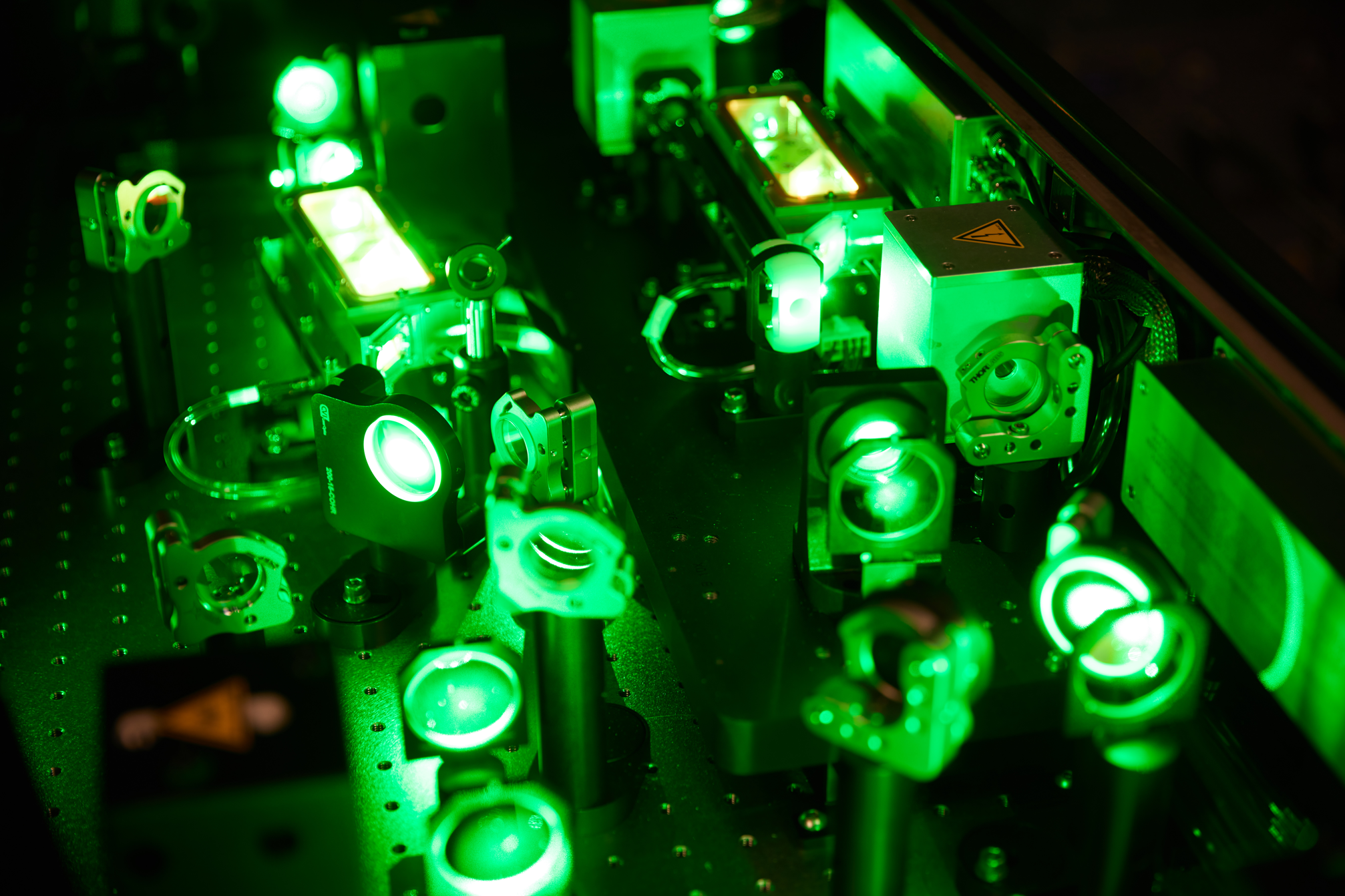
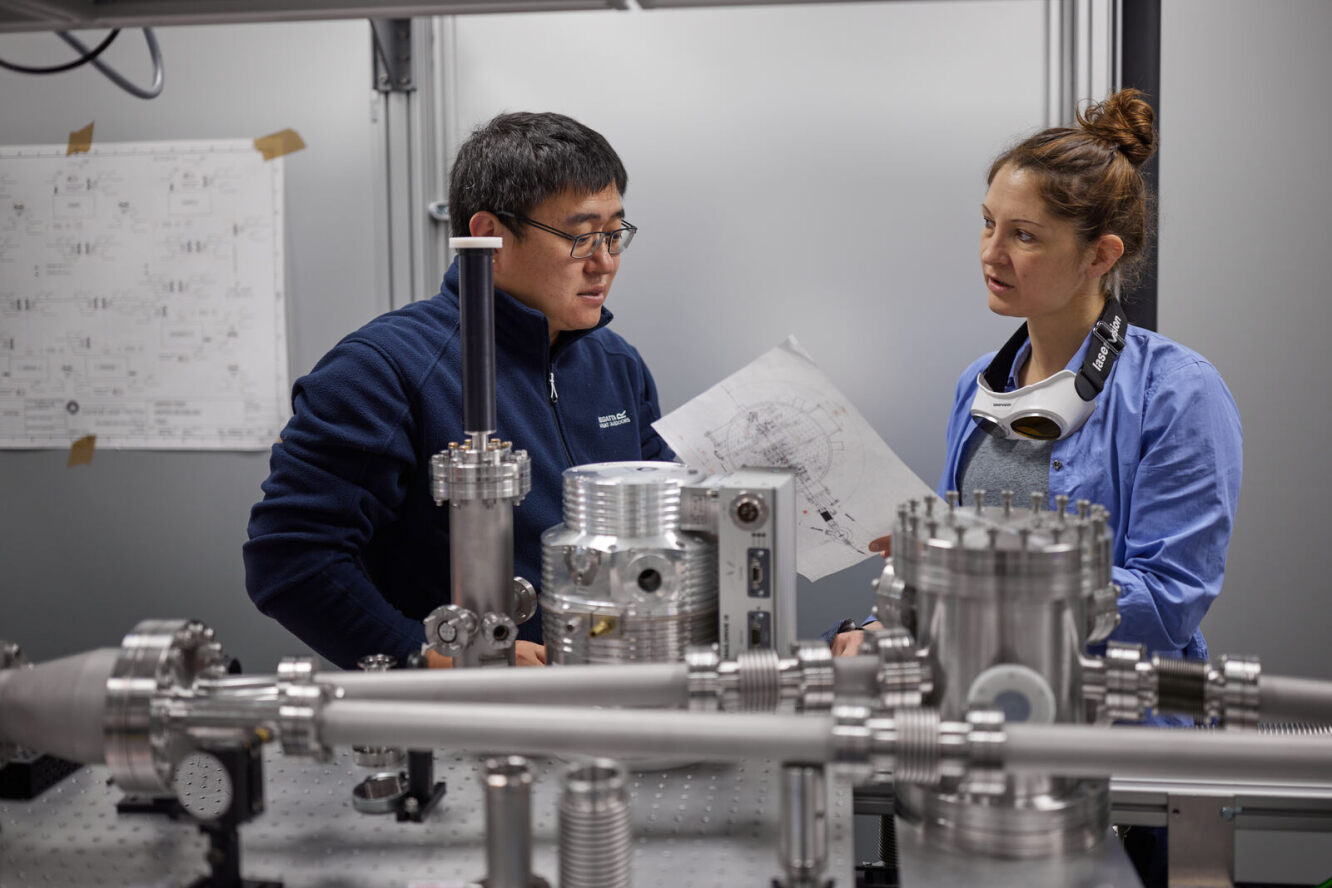
The LSF consists of Octopus (laser-based microscopy for bioimaging), Ultra (ultrafast spectroscopy) and Artemis (imaging and spectroscopy with extreme ultraviolet light). These facilities are internationally recognised and, in many cases, offer unique or bespoke capabilities that are unavailable elsewhere in the UK, Europe, and in some instances globally. The facility is an open-access National user facility and operates a “free-at-point-of-use” access model, with access awarded through independent peer review.
 User access
delivers 186 weeks of peer-reviewed access in ~60 experiments each year
1.7 times over-subscribed at access calls
318 departments of 156 institutions (76 in UK) have accessed Lasers for Science in past decade
all Russell Group universities except LSE have used Lasers for Science
publications include collaborations with 178 organisations, including 67 UK organisations and 111 international partners
2%20.png) Outputs
Outputs
produces around 50 scientific publications each year
approx 30% of publications produced over the last five years have appeared in journals with a Citation Impact Factor of 7 or above
high impact journals include Physical Review Letters, Science Advances, Journal of the American Chemical Society, Nano Letters, Nature Communications, PNAS, Chemical Science, Nature Neuroscience
Support for funded research
- over the last 5 years, LSF has supported researchers who have been awarded over 80 UKRI grants totalling >£110M in value
- 60% of facility access supported UKRI grant-funded research
- 14% of access has non-UK funding, including the European Commission, BMBF, CNRS, CNR, NSF and NIST
Biology, biomedicine and health | - cellular and molecular biology (cancer, kidney disease, immune signalling)
- mechanistic understanding of health and disease
|
Biophotonics and photomedicine | - light-matter interactions in biological systems
- physics-driven approaches to biology and medicine
|
Chemical dynamics and photochemistry | - ultrafast chemical and photophysical processes (photovoltaics)
- fundamental understanding of how molecules behave over time
|
Catalysis and sustainable chemistry | - photocatalysis and electrocatalysis
- industrial and energy-relevant reaction mechanisms
|
Materials and energy science | - functional materials (polymers, nanomaterials, metal complexes)
- 2D surfaces and quantum materials
- semiconductors
|
Electrochemistry and interface science | - electrode-electrolyte interfaces (batteries)
- surface reactions and interfacial dynamics
- links chemistry to real-world devices and processes
|
Environmental and atmospheric science | - aerosols and atmospheric chemistry
- pollutant photochemistry and degradation
- environmental health impacts (e.g. air pollution effects)
|
Soft matter and complex systems | - liquids, droplets, thin films, and nanoscale interfaces
- fundamental behaviour of disordered and interfacial systems
|
Biomaterials and bioengineering
| - hydrogels, organoids, and tissue models
- enables translational and regenerative applications
|
Cultural heritage
| - art and archaeology
- natural history and conservation
|
%202.png) Alignment with industrial strategy
Alignment with industrial strategy
advanced manufacturing: batteries
clean energy: photovoltaics
digital and technology: quantum technology and semiconductors
life sciences: cancer therapies, pharmaceuticals and medical technologies
Industry and innovation
Image: Group photo of LSF staff
Income and investment
- £4.2M annual operating budget (including staff costs)
- total installed Capital value ~ £35M. UKRI, STFC, EPSRC, BBSRC funded
- received £17.2M from the UKRI infrastructure fund for the HiLUX upgrade over 2023-2028
- funding from CRUK, The Guy Foundation, Wellcome Trust
International links
 111 international partners spanning 32 countries across six continents
funded access for EU and international users provided through Horizon Europe’s Laserlab-Europe and Lasers4EU programmes
collaborations with other international facilities including EuXFEL, LCLS, MAX IV, SACLA, ELI-Alps and ELI Beamlines
Staff
49 scientists (40% female and 30% early-career)
multidisciplinary expertise (Physics, Chemistry, Biology, Computing, Astronomy, Materials Science)
Find further information on LSF's laser facilities including specifications, publications, instruments and staff.
Examples of the impactful collaborations, research and discoveries using LSF facilities and expertise.