Forty years after scientists first unravelled the genetic sequence of the Epidermal Growth Factor Receptor (EGFR), a protein whose malfunction plays a vital role in the formation of many types of cancer, global experts gathered at The Royal Society to mark a milestone that fundamentally transformed modern oncology. Scientists from the CLF's LSF were among the event's key contributors, demonstrating the facility's world-class reputation and its continued impact on advancing the field.
The meeting, held in late 2024, bridged four decades of discovery, from the historic revelation of how viruses hijack the control of normal cellular growth to the EGFR-dependent engineering of modern, life-saving targeted therapies. In particular, presenters highlighted how mapping this single receptor has paved the way for breakthrough treatments and overcoming drug resistance in advanced lung cancers.
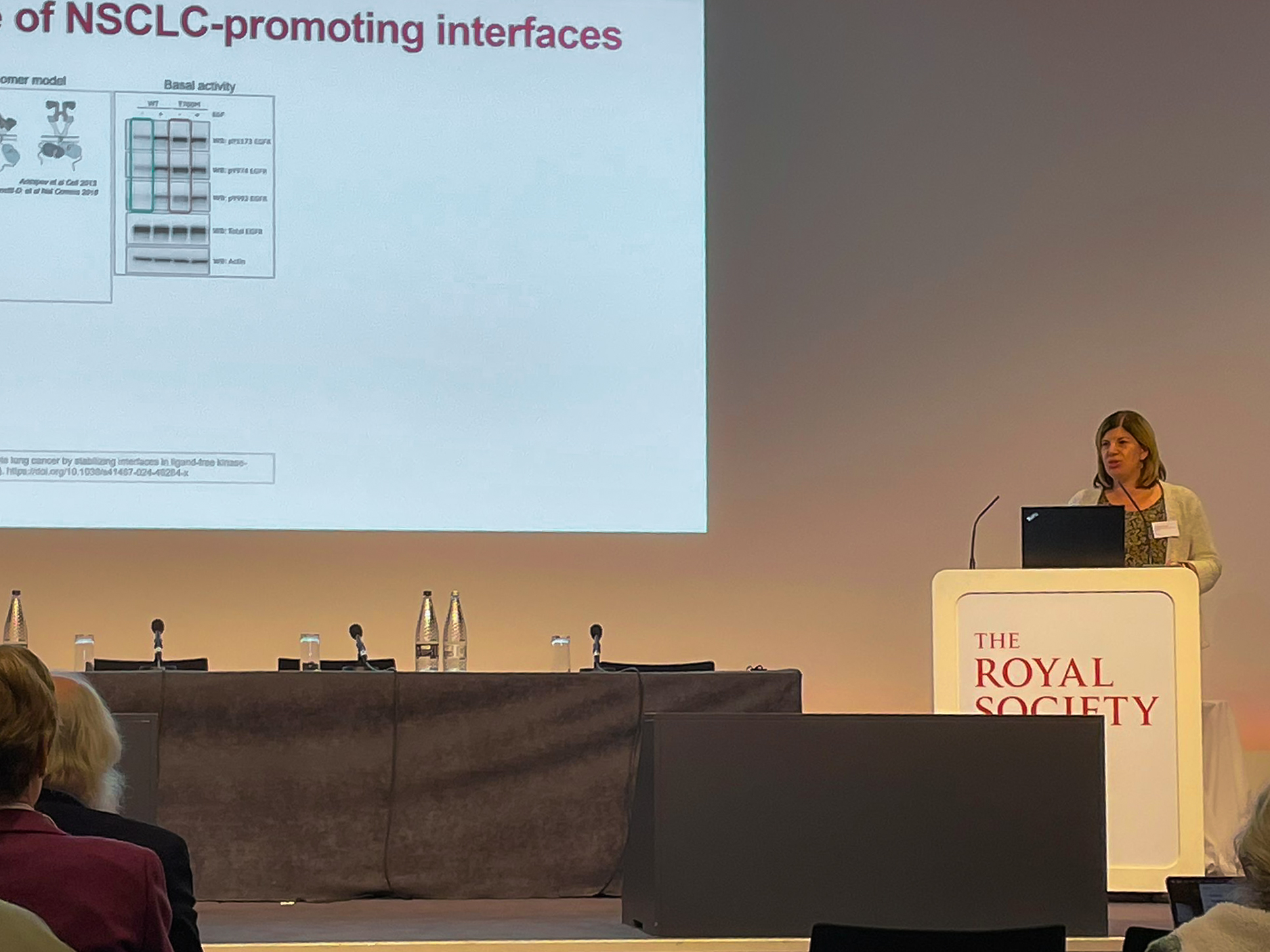 Three LSF scientists, Prof Marisa Martin-Fernandez, Dr Dave Clarke and Dr Selene Roberts, were selected to participate in the high-profile sessions. Marisa was invited to chair a dedicated scientific session, while Selene delivered a presentation detailing her latest empirical findings (pictured). All three presented posters.
Now, in 2026, LSF scientists were invited to follow up the celebration by co-authoring a review article for a special theme issue of the Royal Society's Philosophical Transactions B, one of the world's oldest journals, first published in 1665. Being invited to contribute to “Piecing together the structure of epidermal growth factor receptor complexes: a journey from crystals to cells and its impact on cancer therapy" underscores the significant role that the CLF's LSF has played in advancing this vital area of cancer research, and how it continues to shape the next era for EGFR research.